

selling on credit without a reliable tracking system can create serious challenges. Businesses may struggle to remember who owes them money, how much each customer owes, when payments are due, and which customers have outstanding balances
In today's competitive business environment, offering customers the flexibility to purchase goods on credit can help businesses build stronger customer relationships, encourage repeat purchases, and serve customers who cannot always make immediate payments.
However, selling on credit without a reliable tracking system can create serious challenges. Businesses may struggle to remember who owes them money, how much each customer owes, when payments are due, and which customers have outstanding balances. Without proper records, credit sales can easily lead to financial losses, stock management problems, and cash flow difficulties.
ZillahPOS makes credit selling easier by allowing businesses to record sales made on credit, track outstanding customer balances, and manage payments more effectively.
Whether you operate a retail shop, supermarket, hardware store, wholesale business, cosmetics shop, electronics store, or furniture business, the Sell on Credit feature in ZillahPOS helps you manage credit transactions while keeping your business records organized.
What Is the Sell on Credit Feature in ZillahPOS?
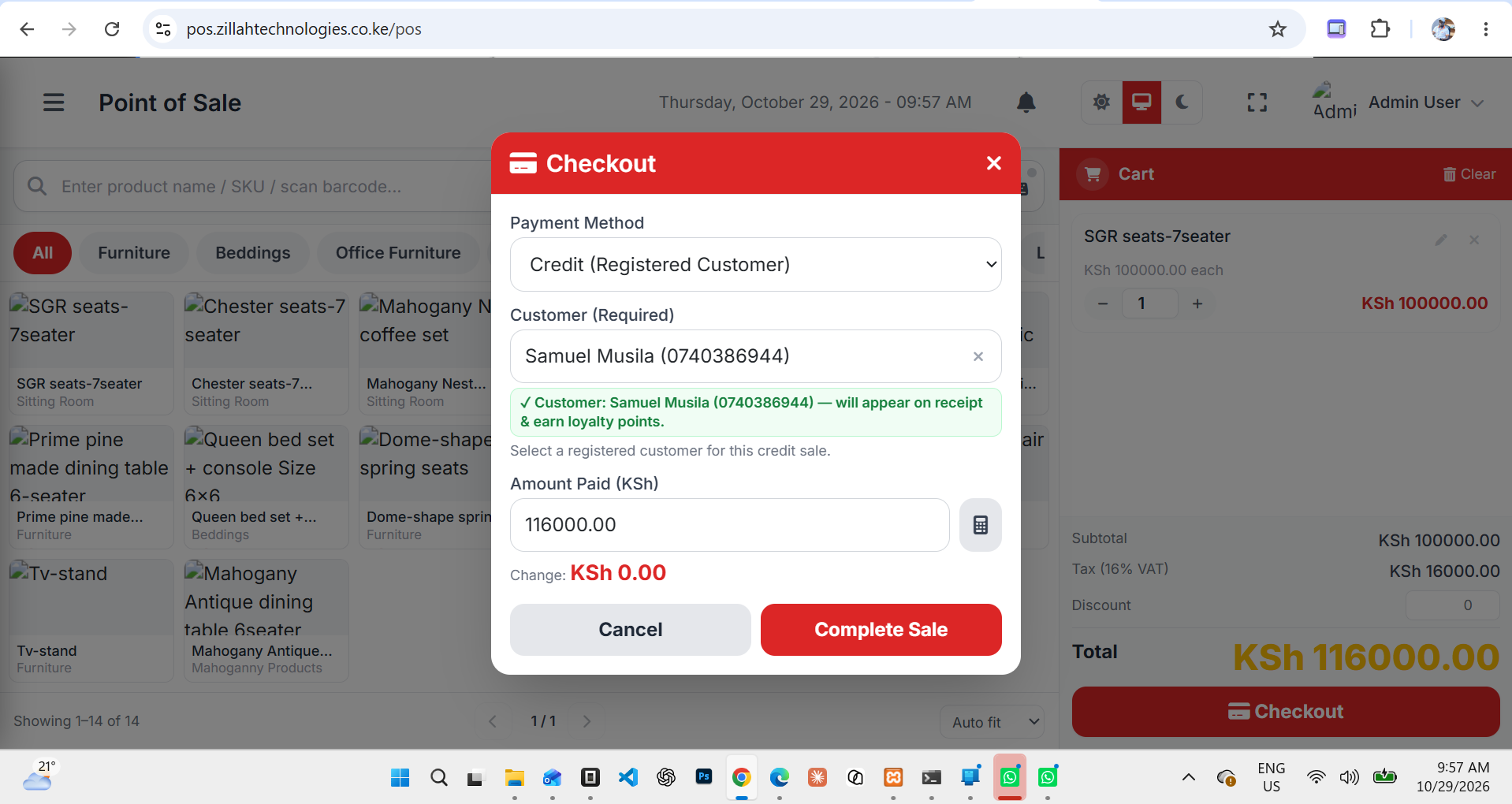
The Sell on Credit feature allows businesses to sell products to customers who will pay at a later date rather than paying the full amount immediately.
Instead of treating every transaction as a fully paid sale, a business can record a credit sale and keep track of the amount the customer still owes.
For example, imagine you operate a hardware shop in Machakos. A regular customer purchases building materials worth KSh 15,000 but can only pay KSh 5,000 immediately.
With a credit-selling system, you can record the transaction, account for the initial payment, and track the remaining balance of KSh 10,000.
When the customer returns to make another payment, you can update the outstanding balance accordingly.
This approach helps you maintain accurate sales records without relying on handwritten notebooks, loose receipts, or memory.
With ZillahPOS, businesses can incorporate credit sales into their point-of-sale operations and maintain better visibility into customer debts.
Key Benefits of Selling on Credit with ZillahPOS
1. Record Credit Sales Easily
Many businesses regularly serve customers who buy products and pay later. These arrangements are particularly common in retail shops, wholesale businesses, hardware stores, and businesses serving established customers.
ZillahPOS helps you record these transactions digitally rather than treating them as ordinary cash or fully paid sales.
Your business can maintain a clearer record of the transaction and the amount that remains outstanding.
This makes it easier to manage customer accounts and reduces the confusion that often comes with informal credit arrangements.
2. Track Outstanding Customer Balances
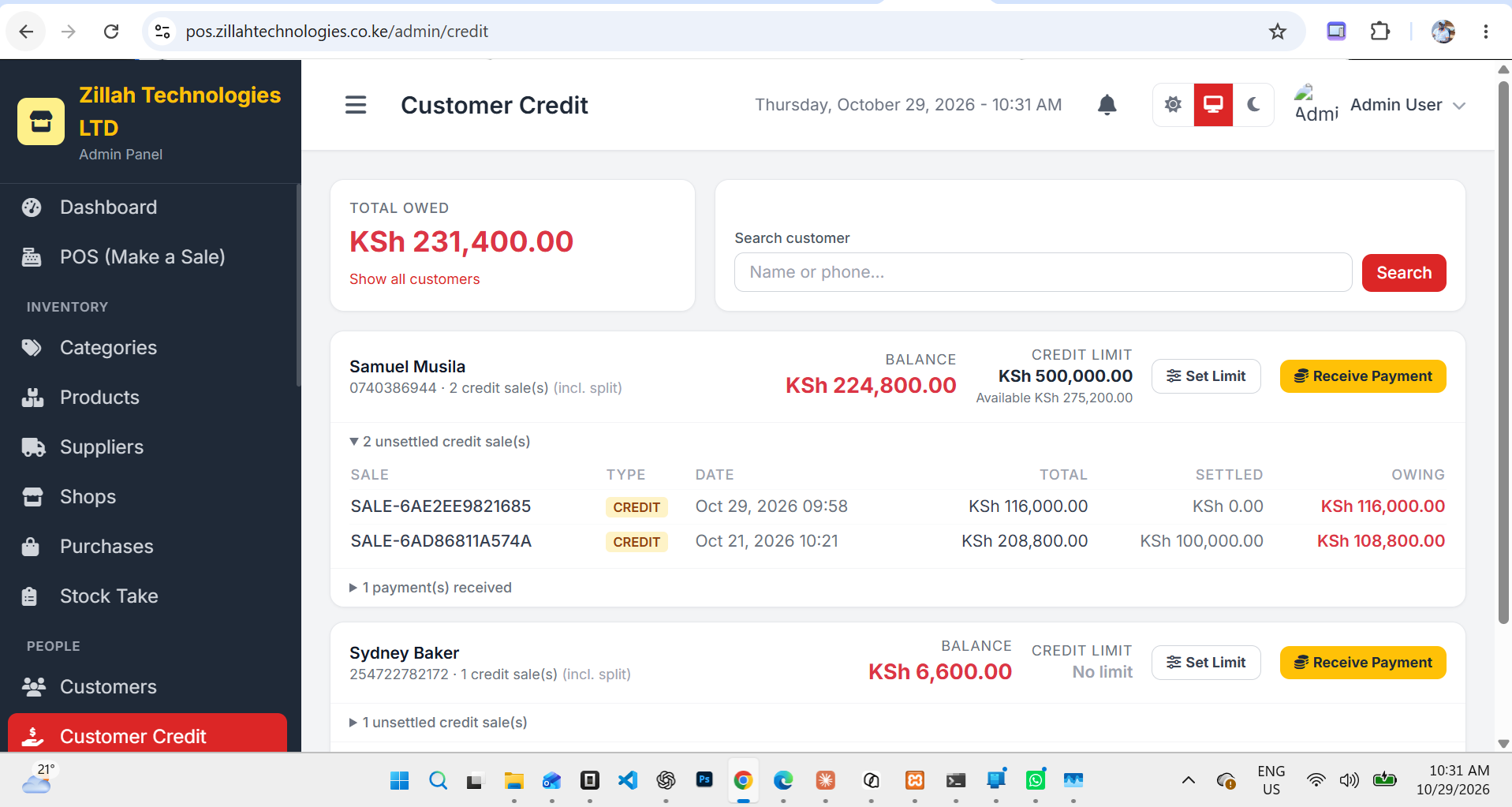
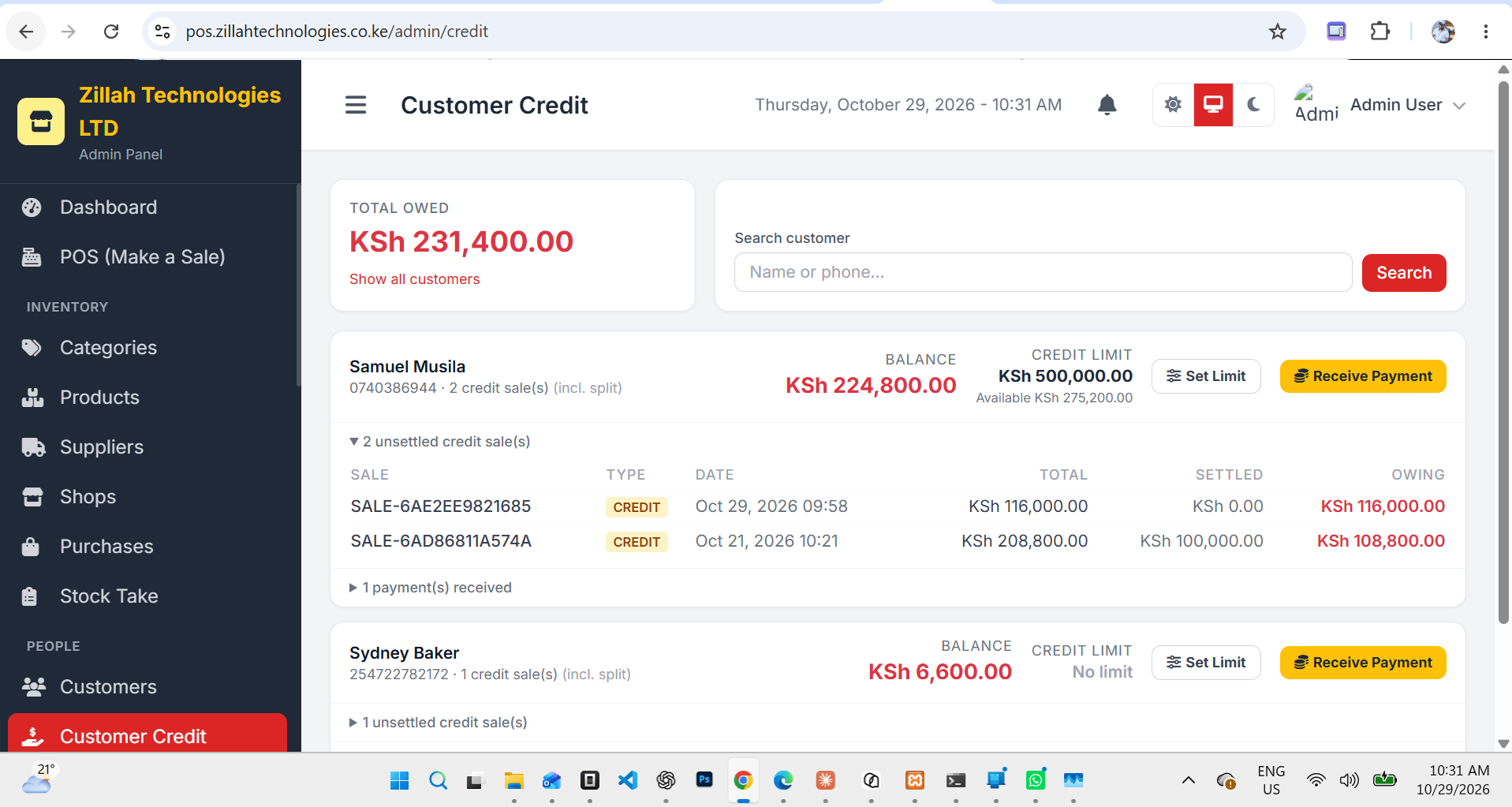
One of the biggest challenges of selling on credit is knowing exactly how much each customer owes.
When credit transactions are recorded manually, it becomes difficult to maintain accurate balances, especially when customers make several purchases or pay in installments.
ZillahPOS helps businesses keep track of outstanding credit balances, making it easier to identify customers with unpaid amounts and determine how much money the business is yet to collect.
Instead of going through several notebooks to calculate a customer's debt, your business can use its POS records to manage credit transactions more efficiently.
Better debt tracking means better financial visibility.
3. Accept Partial Payments
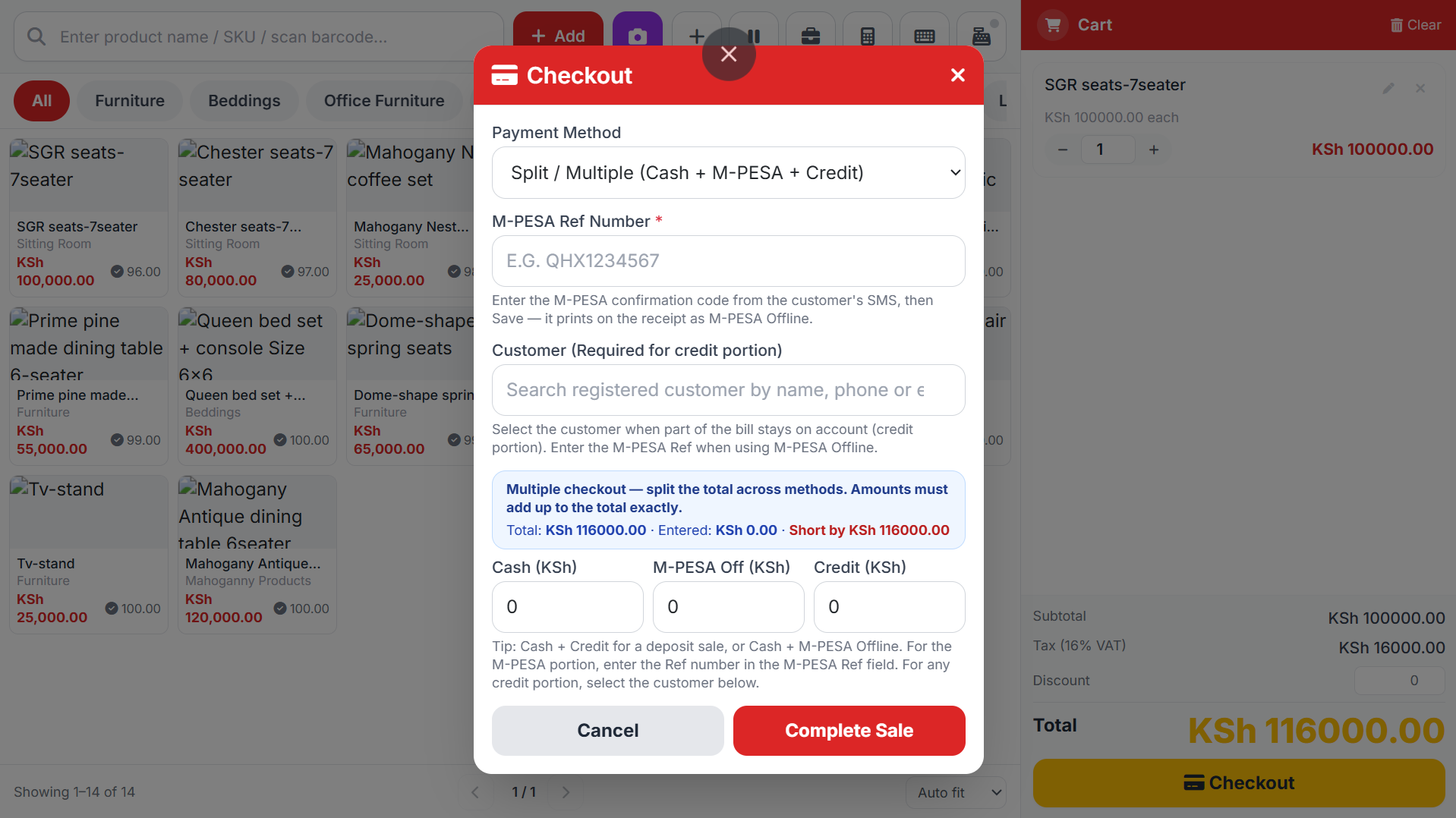
Not every customer can settle an outstanding balance in one payment.
Some customers may prefer to pay in installments depending on their financial circumstances or the agreement they have with your business.
For example, a customer who purchases furniture worth KSh 30,000 may agree to pay KSh 10,000 upfront and clear the remaining amount in subsequent installments.
A credit management workflow allows the business to record the payments received and keep track of the outstanding balance.
This gives your business a more organized way to manage installment payments and determine when a customer has cleared their debt.
The availability of specific installment and partial-payment workflows depends on the configuration and capabilities of your ZillahPOS installation.
4. Improve Customer Relationships
Credit facilities can help businesses build lasting relationships with reliable customers.
A customer who regularly purchases goods from your shop may appreciate the flexibility to pay later, particularly when an urgent need arises or cash is temporarily unavailable.
With ZillahPOS, you can support an organized credit-selling process while maintaining records of what customers purchase and what they owe.
This can help your business serve trusted customers more conveniently without losing track of outstanding payments.
However, businesses should establish clear credit limits and payment terms to ensure that customer convenience does not compromise financial stability.
5. Reduce Errors Associated with Manual Records
Using notebooks to record credit sales may seem convenient when a business is small. However, as the business grows, manual recordkeeping becomes increasingly difficult.
Entries can be misplaced, balances may be calculated incorrectly, and payments may not be reflected in the right customer account.
Digital credit records help reduce dependence on manual calculations and make it easier to review transactions.
By incorporating credit sales into your POS workflow, ZillahPOS helps your business maintain more consistent records and simplifies the process of reviewing outstanding debts.
6. Maintain Better Sales Records
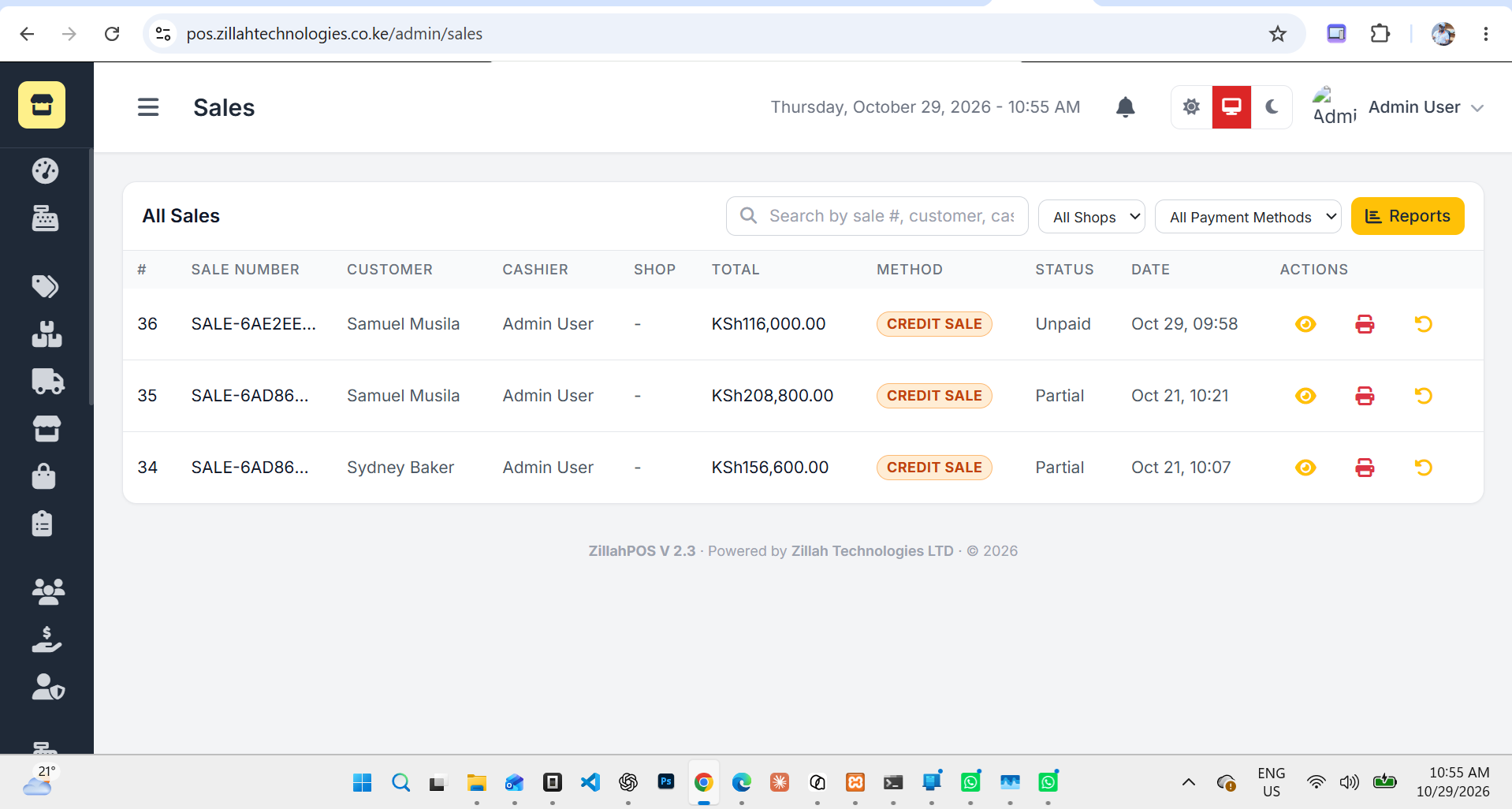
Credit sales are still sales, even when payment has not been completed.
Your business needs to distinguish between the value of goods sold and the cash actually received.
For example, if your shop sells goods worth KSh 50,000 on credit in a day, that does not necessarily mean you have collected KSh 50,000 in cash.
Understanding this difference is essential for managing working capital, paying suppliers, replenishing stock, and meeting other business expenses.
ZillahPOS brings credit transactions into your point-of-sale workflow, helping you maintain organized transaction records alongside your other business sales.
For accurate financial reporting, businesses should ensure that credit sales, outstanding balances, and payments received are reflected correctly in their configured reports.
Which Businesses Can Benefit from ZillahPOS Credit Sales?
The Sell on Credit feature can be particularly useful for businesses that regularly serve repeat customers, offer payment flexibility, or supply goods to customers who pay later.
Here are some examples.
1. Retail Shops and Mini-Supermarkets
Retail shops often serve customers who live nearby or have established relationships with the shop owner.
Some businesses allow trusted customers to take essential goods and pay at the end of the week or month.
With ZillahPOS, such businesses can introduce a more organized way of recording credit transactions and tracking outstanding customer balances.
Instead of relying entirely on handwritten lists, the shop can maintain digital records to help manage these arrangements.
2. Hardware and Building Materials Stores
Hardware businesses often sell cement, iron sheets, plumbing materials, electrical supplies, paint, and other construction products.
Contractors, fundis, and property owners may request goods on credit while waiting for project payments.
ZillahPOS can help hardware businesses record these sales and monitor the balances that customers need to settle.
For businesses dealing with frequent credit transactions, organized records can make a significant difference when reviewing customer accounts and planning cash collections.
3. Wholesale and Distribution Businesses
Wholesalers frequently supply retailers, institutions, and other businesses that purchase goods in large quantities.
Depending on their agreements, some customers may pay after delivery or settle invoices according to agreed payment terms.
By recording credit transactions through their POS workflow, wholesalers can improve visibility into outstanding balances and maintain better records of their customer transactions.
This can be especially valuable when dealing with multiple customers who have different payment arrangements.
4. Furniture Shops
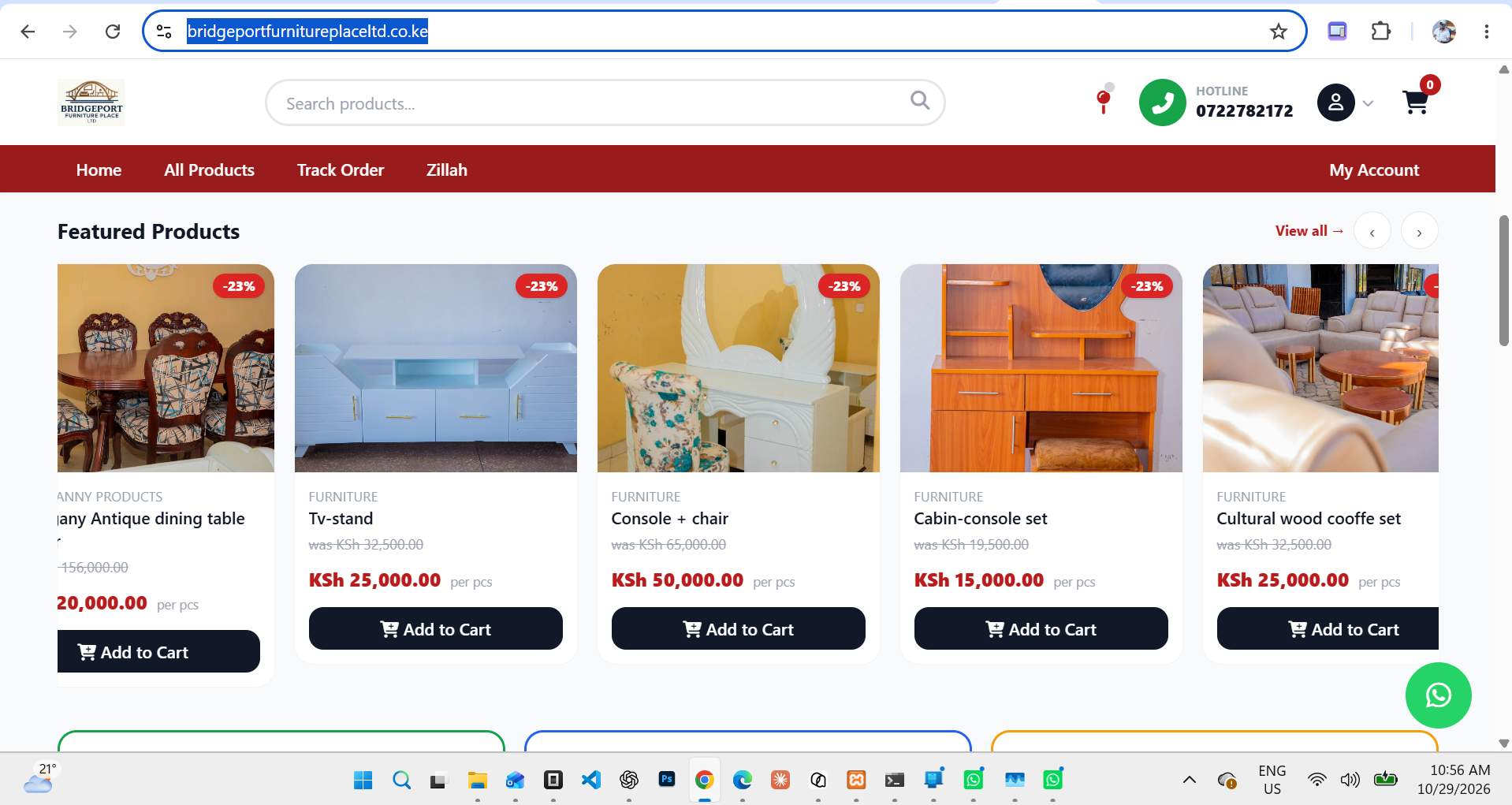
Furniture businesses often sell products with relatively high purchase prices.
Customers purchasing beds, sofas, dining tables, wardrobes, and office furniture may request to pay a deposit and settle the remaining amount later.
For example, a customer purchases a sofa set worth KSh 45,000 and pays KSh 20,000 upfront.
The remaining KSh 25,000 becomes an outstanding amount under the agreed credit arrangement.
A properly maintained credit record helps the furniture business keep track of the customer's balance and payments.
Businesses should also ensure that any agreed delivery conditions, installment schedules, and customer agreements are documented appropriately.
5. Electronics and Appliance Shops
Electronics retailers sell televisions, refrigerators, washing machines, laptops, smartphones, and other products that may be expensive for customers to purchase outright.
Where a business permits customers to buy on credit, maintaining accurate records is essential.
ZillahPOS can help such businesses record credit transactions and monitor the amounts customers are expected to pay.
This provides a more structured alternative to informal credit arrangements.
6. Agrovet and Agricultural Supply Stores
Agricultural supply businesses may serve farmers who need seeds, fertilizers, animal feeds, pesticides, and other farm inputs before receiving income from their agricultural activities.
Some businesses extend credit to trusted farmers based on seasonal payment arrangements.
ZillahPOS can support the recording of credit sales and outstanding balances, helping these businesses maintain clearer records of customer obligations.
Businesses should establish suitable credit terms and comply with applicable requirements when offering credit for regulated products.
7. Salons, Boutiques, and Cosmetics Shops
Businesses serving regular customers may sometimes allow selected customers to pay later.
Whether selling clothing, beauty products, cosmetics, or other merchandise, a business can benefit from keeping proper records of credit transactions instead of relying on informal agreements.
ZillahPOS offers a practical way to incorporate credit selling into the business's POS operations.
How to Use Credit Sales Effectively in Your Business
Although selling on credit can help attract and retain customers, it must be managed carefully.
A business can make substantial sales on paper and still struggle to pay suppliers if too much money remains tied up in unpaid customer balances.
Here are practical ways to use the Sell on Credit feature responsibly.
Step 1: Identify Customers Eligible for Credit
Not every customer should automatically qualify for credit.
Businesses should establish clear rules for deciding which customers can purchase goods on credit.
For example, you may choose to offer credit only to regular customers, approved business clients, or customers who have demonstrated a reliable payment history.
This helps reduce the risk of unpaid debts.
Step 2: Set Clear Credit Limits
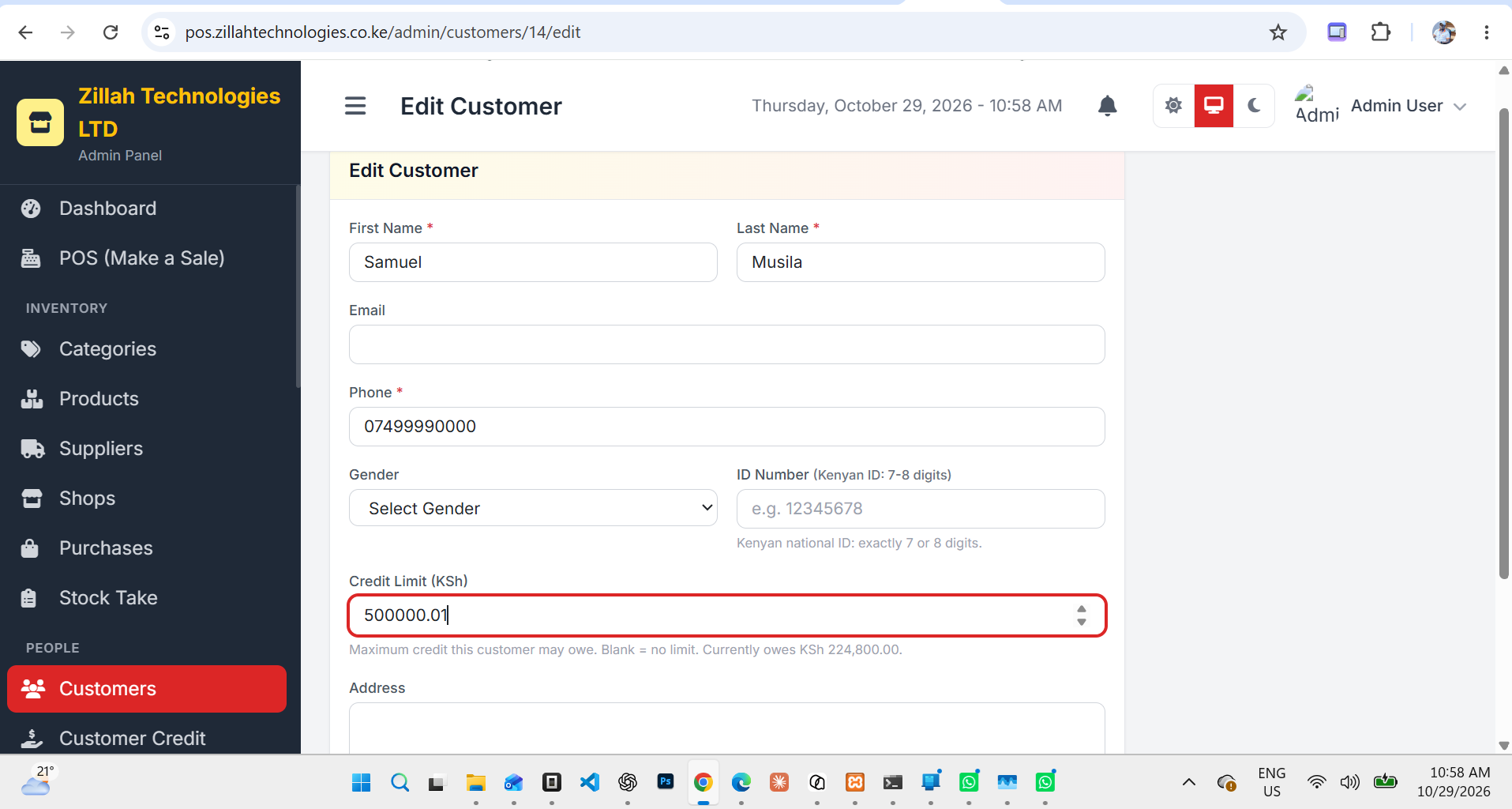
Decide the maximum amount each customer can owe your business at any given time.
For instance, you may allow an approved customer to maintain an outstanding balance of up to KSh 10,000.
Once the customer reaches that limit, you can require them to clear some or all of their outstanding balance before making another credit purchase.
Clear limits help protect your business from accumulating excessive unpaid debts.
Step 3: Agree on Payment Terms
Before releasing goods on credit, make sure the customer understands when payment is expected.
Your payment terms may specify whether the balance is due within seven days, fourteen days, thirty days, or another agreed period.
Document the agreement so both parties understand their obligations.
Step 4: Record Every Credit Transaction
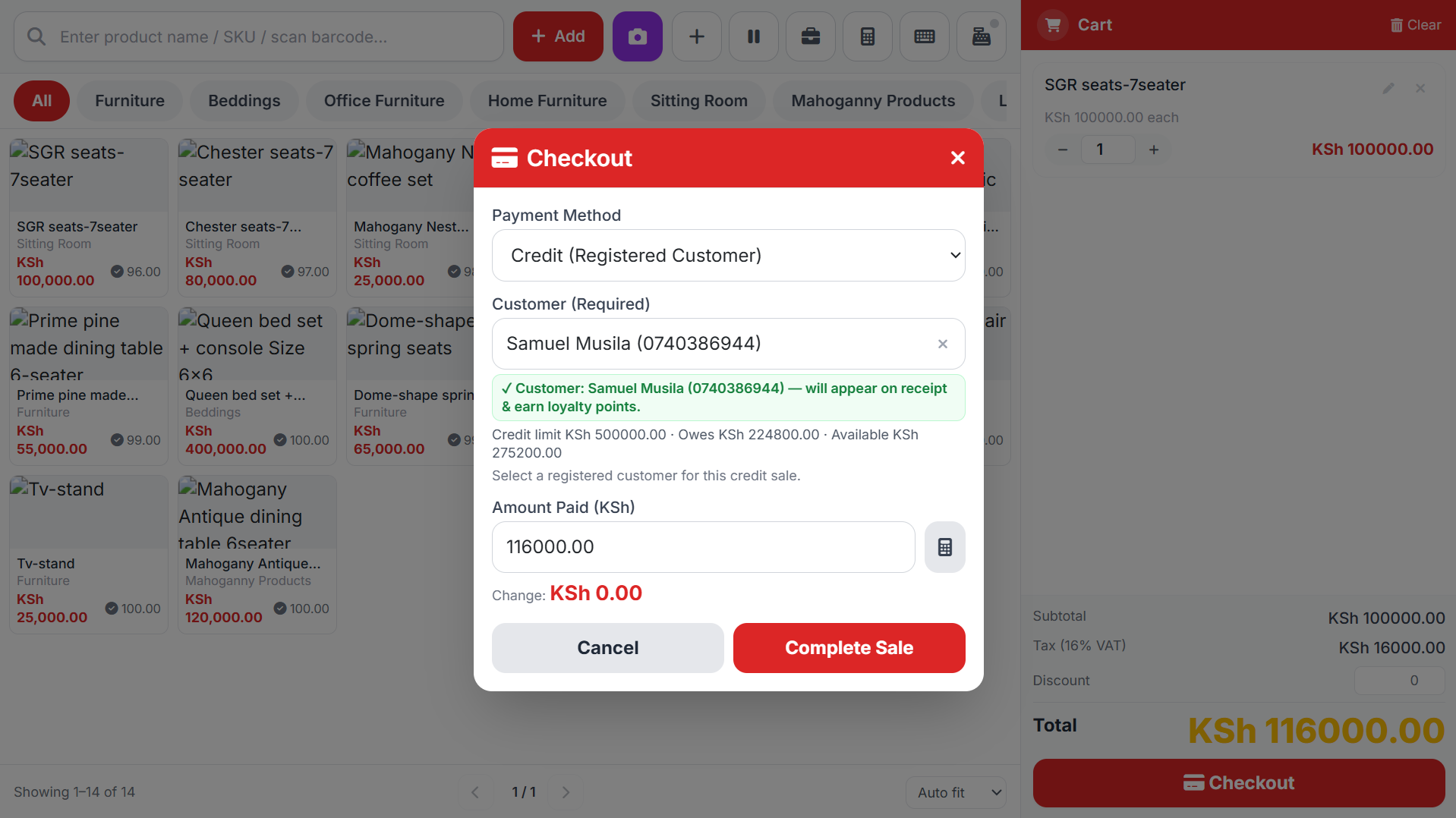
Avoid releasing goods on credit without recording the transaction.
Every credit sale should be documented so that you can establish the products sold, the transaction value, the customer involved, and the outstanding amount.
Using ZillahPOS as part of your credit-selling workflow helps reduce reliance on informal records and supports more consistent transaction tracking.
Step 5: Record Payments Promptly
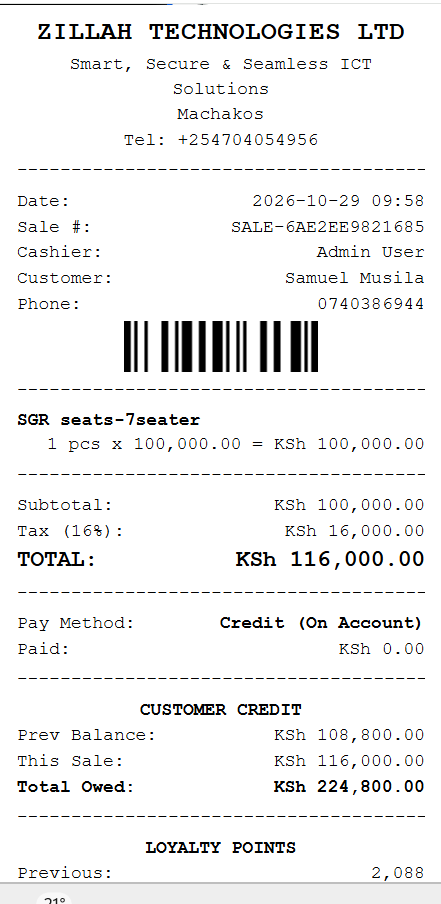
Whenever a customer makes a payment toward an outstanding balance, ensure that the payment is recorded against the appropriate account or transaction.
For example:
- Original credit sale: KSh 12,000
- First payment: KSh 4,000
- Second payment: KSh 3,000
- Remaining balance: KSh 5,000
Maintaining accurate payment records helps your business determine what has been paid and what is still outstanding.
Step 6: Follow Up on Outstanding Debts
Review outstanding balances regularly and contact customers whose payments are due.
Friendly reminders can help customers remember their obligations and encourage timely settlement.
Your business should establish a consistent follow-up process instead of waiting until unpaid balances become too large.
Step 7: Review Credit Sales and Cash Flow
Regularly assess how much of your business's sales value remains unpaid.
High credit sales do not automatically translate into healthy cash flow.
You need sufficient available cash to replenish stock, pay rent, meet payroll obligations, and settle supplier invoices.
Reviewing your credit records alongside your other business reports can help you make better decisions about extending or restricting credit.
Why Choose ZillahPOS for Your Business?
ZillahPOS is designed to help businesses manage their day-to-day sales and stock operations more efficiently.
In addition to supporting credit-selling workflows, the platform offers features designed to improve visibility, organization, and control across business operations.
Depending on your selected configuration, ZillahPOS offers features such as:
- Sell on Credit: Record sales where payment is made later.
- Stock Management: Monitor product stock and manage inventory records.
- Real-Time Stock Tracking: Keep stock records updated as transactions are processed.
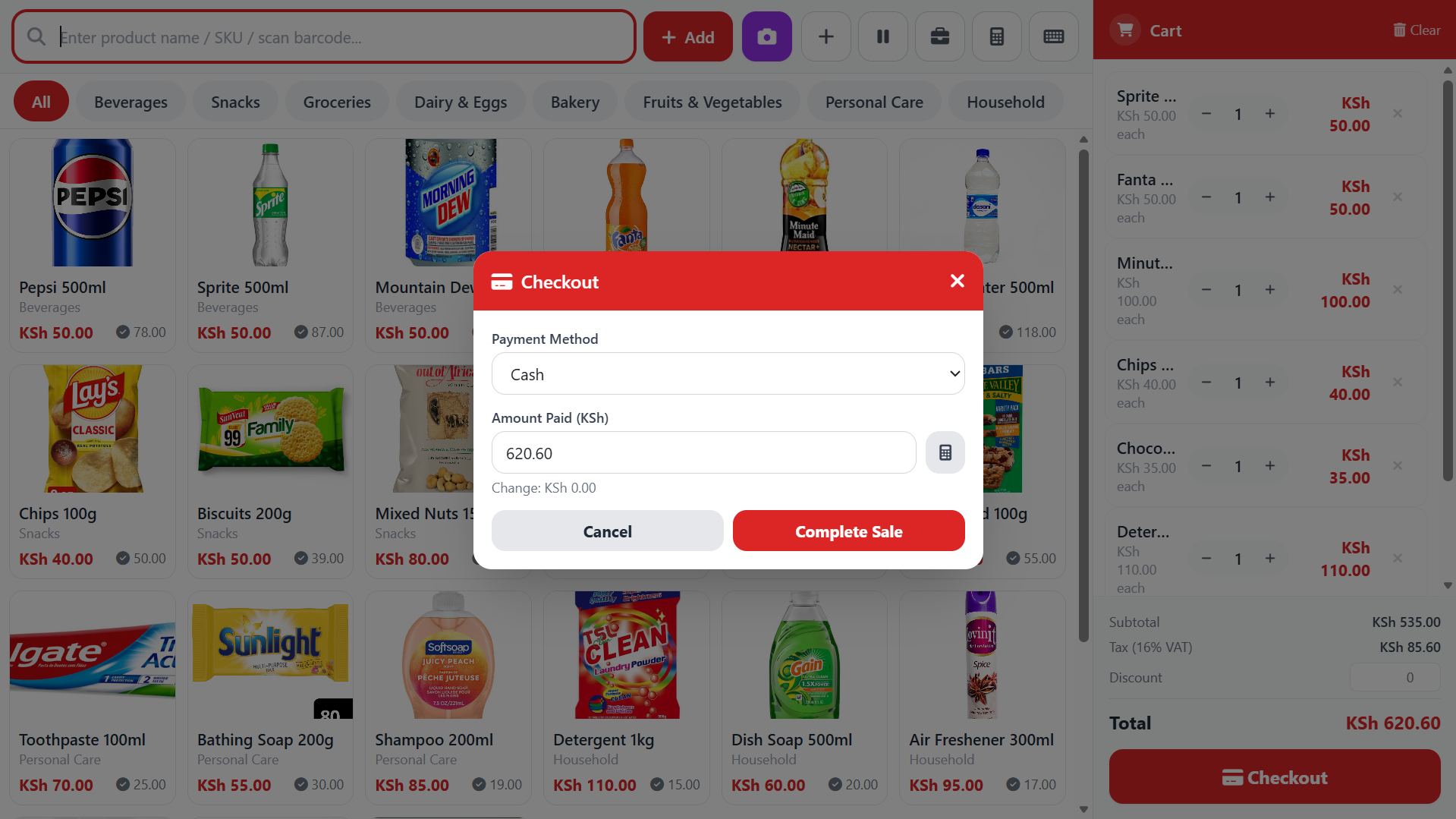
- Barcode Scanning: Speed up product identification and checkout.
- M-PESA STK Push: Simplify customer payments through supported M-PESA integration.
- Low-Stock Notifications: Help identify products that need replenishment.
- Product Expiry Tracking: Monitor products with expiry dates.
- Multi-Branch Management: Support businesses operating across multiple branches, depending on the selected configuration.
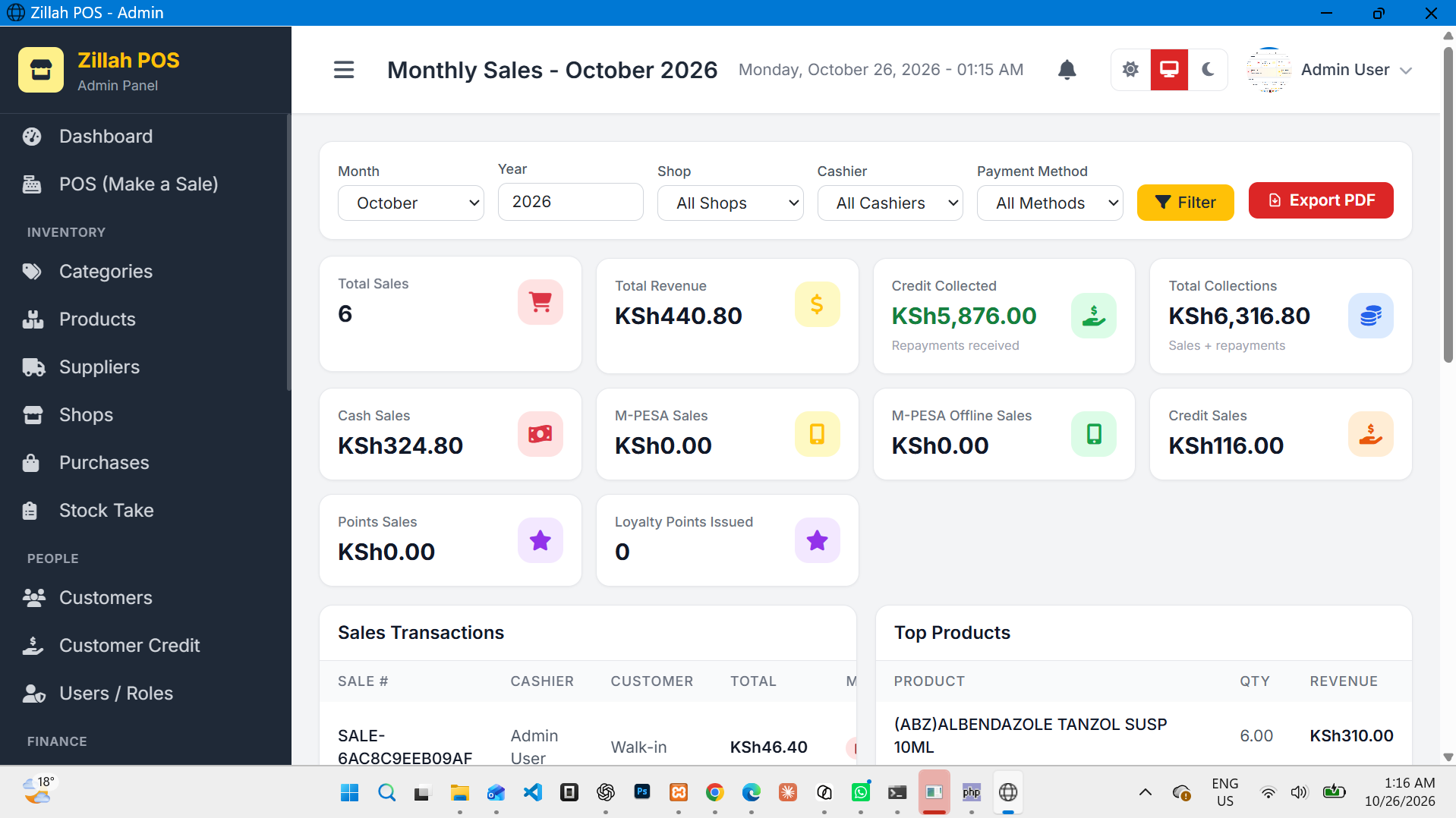
- Sales Reporting: Review sales activity and monitor business performance.
- Flexible Deployment: Run ZillahPOS in the cloud or use supported local installations, depending on your business requirements.
These capabilities help bring important business processes into one POS environment.
Rather than managing sales, stock, and payment records through disconnected systems, businesses can use ZillahPOS to improve the organization of their daily operations.
Is Selling on Credit Good for Your Business?
Selling on credit can be beneficial, but it is not suitable for every customer or every business situation.
When managed well, credit sales can help you retain customers, increase purchasing flexibility, and build long-term business relationships.
When poorly managed, they can create cash flow problems, increase unpaid debts, and make it difficult to replenish stock.
The key is to combine customer flexibility with proper recordkeeping and responsible credit policies.
With a suitable credit management process and ZillahPOS supporting your sales records, your business can make informed decisions about which customers to serve on credit and how to monitor outstanding balances.
Remember that a sale is not the same as a payment received. Always monitor collections and ensure that your credit arrangements remain sustainable.
Start Managing Your Credit Sales with ZillahPOS
If your business regularly allows customers to buy now and pay later, it is time to move beyond handwritten credit books and unstructured payment records.
ZillahPOS helps businesses incorporate credit sales into their point-of-sale operations, making it easier to maintain organized records and monitor outstanding customer balances.
Whether you run a retail shop, hardware store, furniture business, wholesale outlet, supermarket, or another credit-selling business, ZillahPOS can help you manage your sales operations more efficiently.
Make every sale count. Keep track of what customers owe. Take greater control of your business with ZillahPOS.
Discover ZillahPOS and explore how it can support your business operations.

Comments 0
No comments yet. Be the first to share your thoughts!